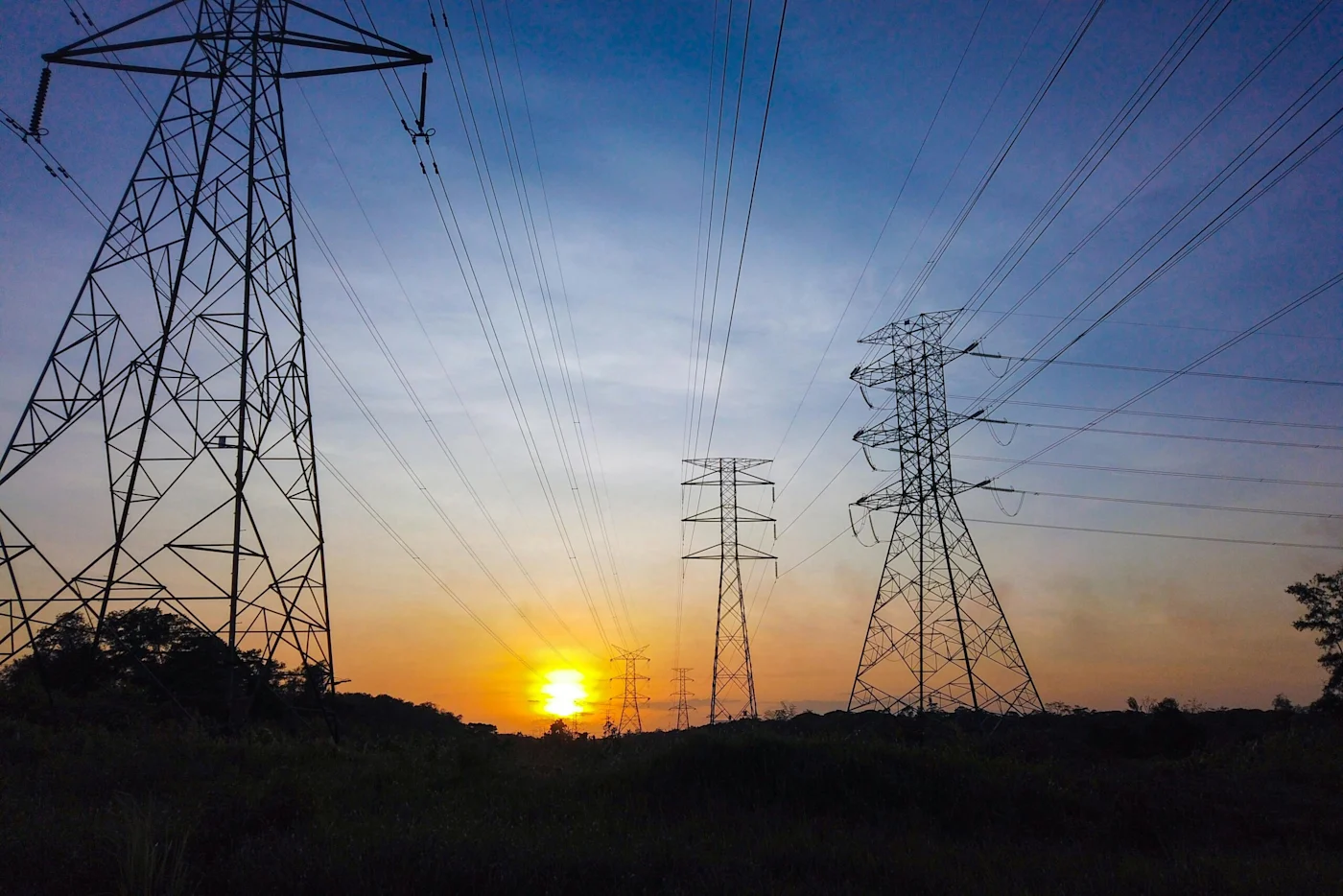
This shift is particularly pronounced in Britain, where Brexit complexities have combined with global disruptions to create unique challenges for supply chain leaders, especially within the critical energy sector.
The Post-Pandemic and Brexit Reality: A Double Shadow
The COVID-19 pandemic was a seismic event that permanently altered the supply chain landscape. It exposed the fragility of just-in-time models that relied heavily on distant, single-source suppliers.
In the energy sector this manifested as severe disruptions. Lead times for critical grid components such as large power transformers stretched from months to years, with the U.S. Department of Energy noting average waits of 38 weeks in 2023. These delays stalled grid modernisation projects and highlighted a dangerous dependency on a limited number of overseas manufacturers.
For British businesses, these pandemic challenges were compounded by Brexit-related complexities. Research from 2025 shows that 70% of UK firms report higher supply chain costs due to new tariffs and trade rules, while 50% of companies have experienced significant delays, with customs procedures extending delivery timelines by an average of 30%.
The combination has created what one manufacturing executive described as managing supply chains while the rules of the game keep changing.
The automotive sector illustrates this dual challenge particularly clearly. Already vulnerable to pandemic-related semiconductor shortages, UK automotive manufacturers faced additional disruption from Brexit’s impact on just-in-time production methods. Border delays and customs checks have proven particularly problematic for an industry that relies on components crossing borders multiple times during assembly.
While the acute phase of the pandemic has passed, its effects linger alongside ongoing Brexit adjustments. Companies are still grappling with volatile shipping costs, unpredictable component availability, and the realisation that their supply networks lack the agility to withstand shocks.
The crisis served as a powerful catalyst, forcing boards and executives to move supply chain risk from an operational report to a central focus of corporate strategy.
Geopolitical Headwinds: Tariffs and Strategic Realignment
Layered on top of post-pandemic recovery are escalating geopolitical tensions and a renewed focus on economic nationalism.
Trade policies, including significant tariffs implemented over the past year, are reshaping global trade flows. These measures are designed to reduce dependency on specific nations, particularly China, and encourage domestic production in strategic sectors such as clean energy.
Reports show that tariffs have become a primary motivator for companies relocating manufacturing, in some cases surpassing even government incentives.
This is not merely a political trend. It is a strategic risk mitigation imperative. For energy manufacturing, where China controls vast portions of the supply chain such as more than 80% of global solar wafer production, this realignment is critical for national and economic security.
The Rise of Reshoring and Strategic Repositioning
In response to these pressures, firms globally are actively moving production sites.
This trend encompasses both reshoring, returning manufacturing to the home country, and nearshoring, moving production to nearby countries. Both are accelerating.
Recent data shows hundreds of thousands of manufacturing jobs announced through reshoring and foreign direct investment initiatives in major markets.
For British businesses the strategic calculus is more complex. Some manufacturers are exploring reshoring opportunities to reduce dependency on complex EU supply chains. Others are considering nearshoring within Europe to maintain market access while managing Brexit-related trade barriers.
Surveys show that the majority of companies now identify Brexit as one of the most significant supply chain disruptions of recent years, forcing reassessments of supplier networks and manufacturing footprints.
The energy sector presents particular opportunities for UK-focused supply chain reorganisation. Government initiatives encouraging investment in domestic energy supply chains signal official recognition of localisation benefits.
With ambitious offshore wind targets for 2030 and current installed capacity still well below those ambitions, there are substantial opportunities for British firms to capture a larger share of this growing market through strategic supply chain positioning.
Trade data also reflects this broader shift. Global supply chains are increasingly regionalising, with countries building more localised and diversified networks to reduce exposure to geopolitical risk.
The Resilience Imperative: Key Trends Shaping the Future
The convergence of these disruptions has accelerated a new focus on building resilient, agile and sustainable supply chains.
This is not a temporary adjustment but a long-term strategic pivot.
Three major trends are defining this new era for energy manufacturing.
Trend 1: Diversification and Multi-Shoring
The goal is no longer to identify the single cheapest supplier. Instead, organisations are building diversified supplier ecosystems.
This approach involves multi-shoring, blending domestic production with nearshoring and partnerships with trusted geopolitical allies.
The UK’s strategy reflects both global pressures and Brexit realities. Government initiatives emphasising energy security demonstrate growing recognition that supply chain diversification is critical for national resilience.
For energy manufacturing, where China dominates large portions of global supply chains, reducing single-source dependencies has become strategically important.
By diversifying sources, companies reduce exposure to single points of failure, whether caused by factory shutdowns, natural disasters or sudden policy changes.
Trend 2: Digitalisation and Data-Driven Visibility
A central lesson from recent crises is simple: supply chains cannot be managed effectively without visibility.
A lack of transparency beyond Tier-1 suppliers proved to be a major vulnerability. In response, leading organisations are investing heavily in digital supply chain infrastructure.
This includes advanced procurement platforms such as SAP Ariba and Coupa, alongside real-time analytics tools that provide end-to-end supply network visibility.
These systems enable predictive risk monitoring, allowing businesses to identify vulnerabilities before they escalate into major disruptions. The result is a shift from reactive crisis management to proactive supply chain intelligence.
Trend 3: ESG and Sustainable Sourcing
Environmental, Social and Governance criteria have moved from peripheral consideration to central strategic priority.
This shift is particularly significant within the energy sector, where stakeholders increasingly expect full lifecycle transparency.
For energy manufacturers this includes ensuring ethical sourcing of materials such as lithium, cobalt and rare earth elements, alongside reducing the carbon footprint of logistics and production.
Leading organisations are embedding ESG principles directly into procurement strategies, recognising that sustainable supply chains are inherently more resilient and commercially credible.
The Critical Bottleneck: The War for Talent in a Post-Brexit Environment
Technology, strategy and investment alone cannot transform supply chains without the right leadership.
A growing shortage of experienced supply chain talent has emerged as one of the most significant challenges facing organisations today. Brexit has intensified this pressure within the UK.
Logistics and manufacturing sectors report widespread hiring difficulties, as reductions in EU labour availability have directly affected operational capacity.
Workforce shortages are increasing operational complexity, reducing productivity and driving up labour costs as companies compete for a smaller pool of specialised professionals.
The modern supply chain leader is no longer simply a cost manager.
Today’s leaders must combine expertise across:
strategic planning
digital transformation
geopolitical risk management
sustainability integration
cross-border regulatory navigation
Securing this level of expertise has become increasingly competitive.
Supply chain and procurement functions have evolved from operational support roles into engines of growth and resilience. Organisations now require leaders capable of delivering measurable operational impact while navigating geopolitical uncertainty and structural changes in global trade.
Strategic talent acquisition has therefore become central to supply chain transformation.
Conclusion: Building the Supply Chain of Tomorrow
The era of prioritising efficiency above all else is over.
The organisations that succeed in the coming decade will be those that build supply networks defined by resilience, agility and intelligence.
Achieving this requires:
realignment of global manufacturing footprints
deep investment in digital supply chain visibility
strong commitment to sustainable sourcing and ESG principles
At the centre of this transformation sits human capital.
Securing leaders capable of navigating geopolitical disruption, technological transformation and evolving regulatory environments has become one of the defining strategic challenges for modern organisations.